
Our approach to practice
Our approach
Our belief that autistic people have a right to happy, healthy and fulfilling lives is reflected in our own practice. Our services support autistic people to live their lives and fulfil their aspirations on their own terms.
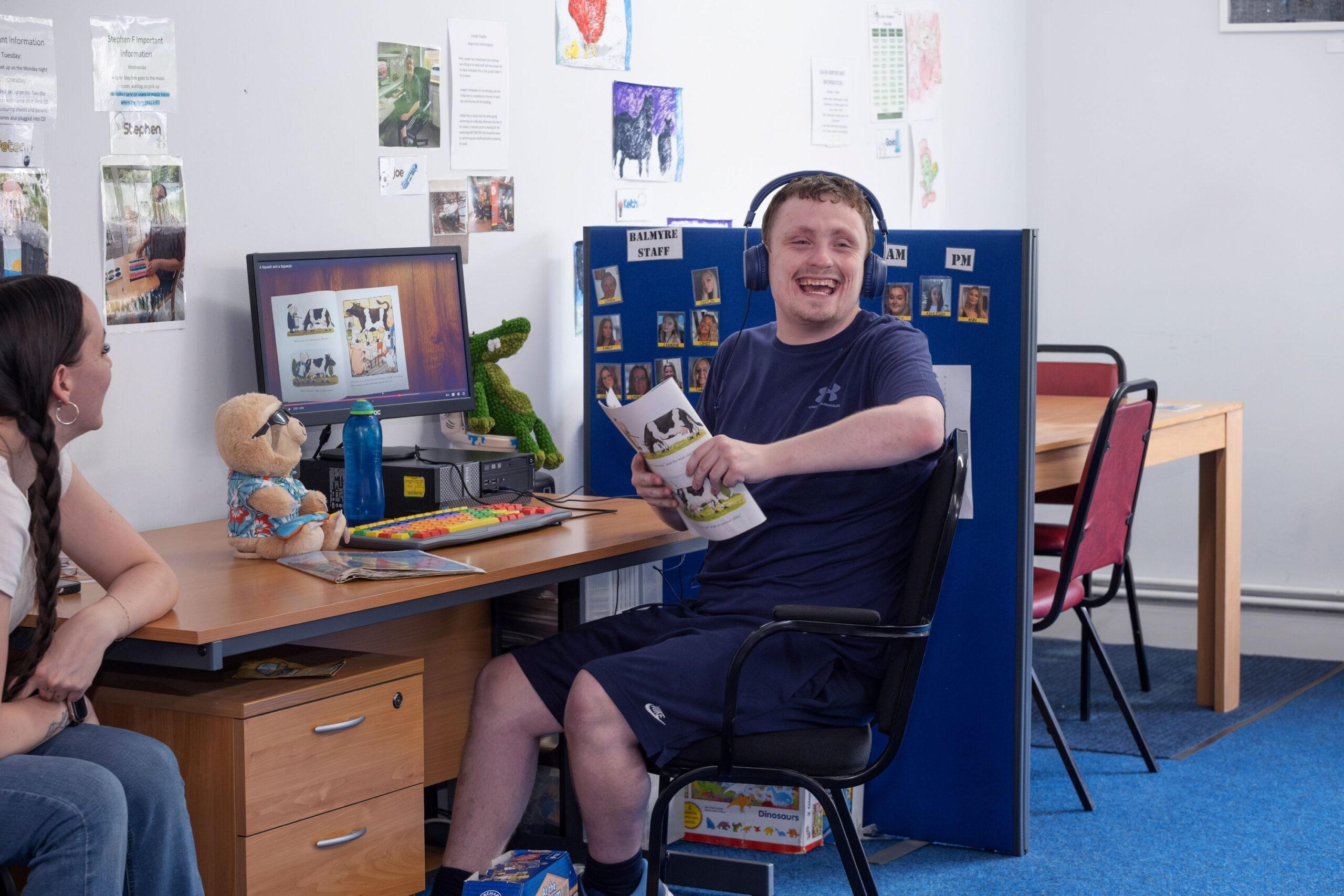
As autism specialists we recognise that autistic people will have specific support needs around communication, sensory processing and different thinking styles. However, we take a neuro-affirming approach to our practice – following the principle that autistic people should find their own definition of a happy and a meaningful life. Our individualised support practice embraces the different ways in which a person may communicate, interact with others, our find joy in passionate interests and sensory experiences rather than fit a socially expected norm of what a good life looks like.
Our approach to autism support provision is set out in Scottish Autism’s own Practice Framework that shapes support planning, everyday practice and continuous learning in our services. Moving away from the deficit-based understandings of autism and ‘intervention’ that used to be common, the framework focuses on holistic support for wellbeing and upholding autistic people’s rights to autonomy, choice and social inclusion.
The Scottish Autism Practice Framework underpins our Autism Practice Improvement Programme – a structured, reflective approach to improving practice which we use within our own services and with external partners through Elevate training and consultancy.
In some of our services, the autistic people that we support may occasionally become dysregulated, and present moments of acute risk to themselves and others. In such instances, we always try to recognise the way that a person is feeling and seek to reduce causes of stress and distress. We train our practitioners according to the Studio III organisation’s Low Arousal approach to reduce incidence of distress, and provide the tools to de-escalate and manage such situations when they arise.
This site is protected by reCAPTCHA and the Google Privacy Policy and Terms of Service apply.